By Kofi Quaye
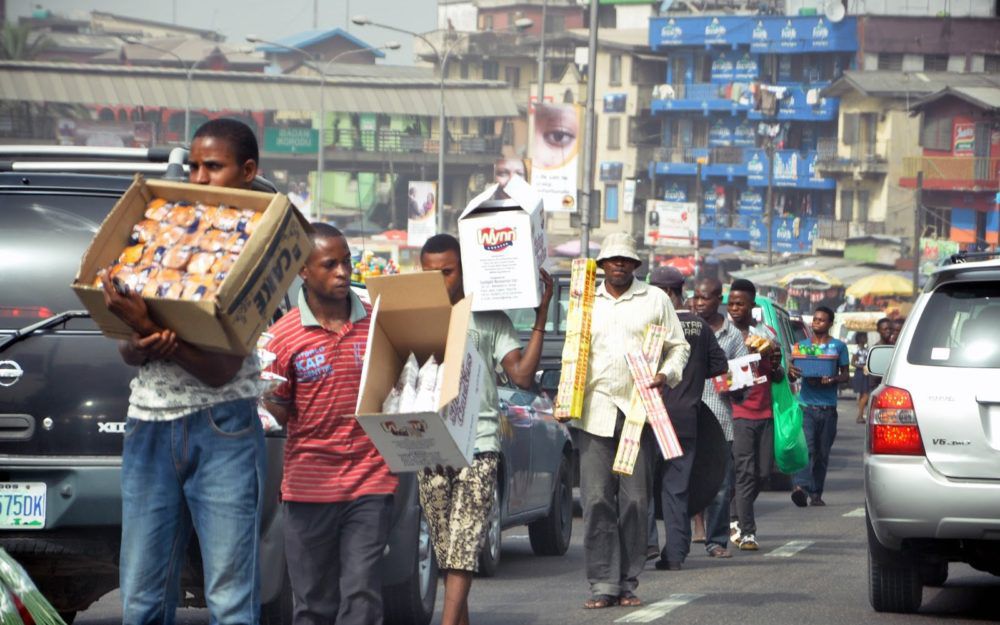
In Ghana, the marketplace is everywhere. From the sidewalk to the streets, from dusty rural towns to urban highways with bumper-to-bumper traffic, everything sells. And the key to success? Find what sells more, costs less to make or import, and deliver it fast.
Women lead the street hustle of selling and vending in Ghana
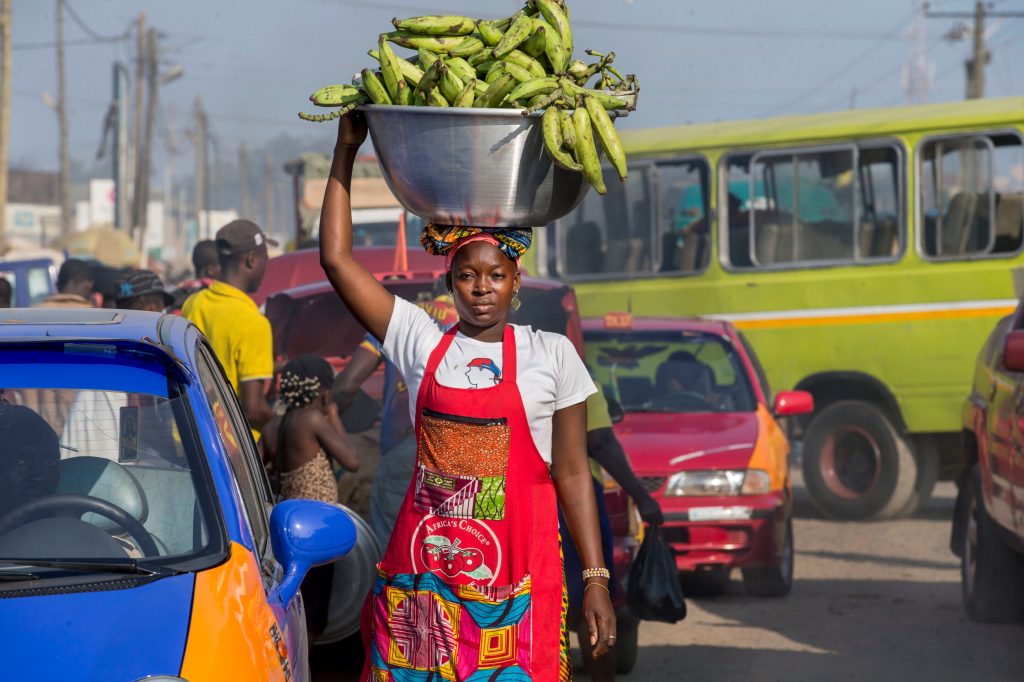
Retail, especially street vending, is the mainstay of Ghana’s informal economy—and women are its undisputed champions. Walk through any traffic-clogged intersection in Accra or a busy market town like Kasoa or any city and you’ll see them in action. Women carrying everything from cold water sachets to hot meat pies on their heads move effortlessly between moving vehicles. No fear, no hesitation. The hustle goes on. Change gets counted, products get sold, and they’re off to the next buyer—all in seconds with moving vehicles around them. Amazing skills you don’t learn from a classroom.
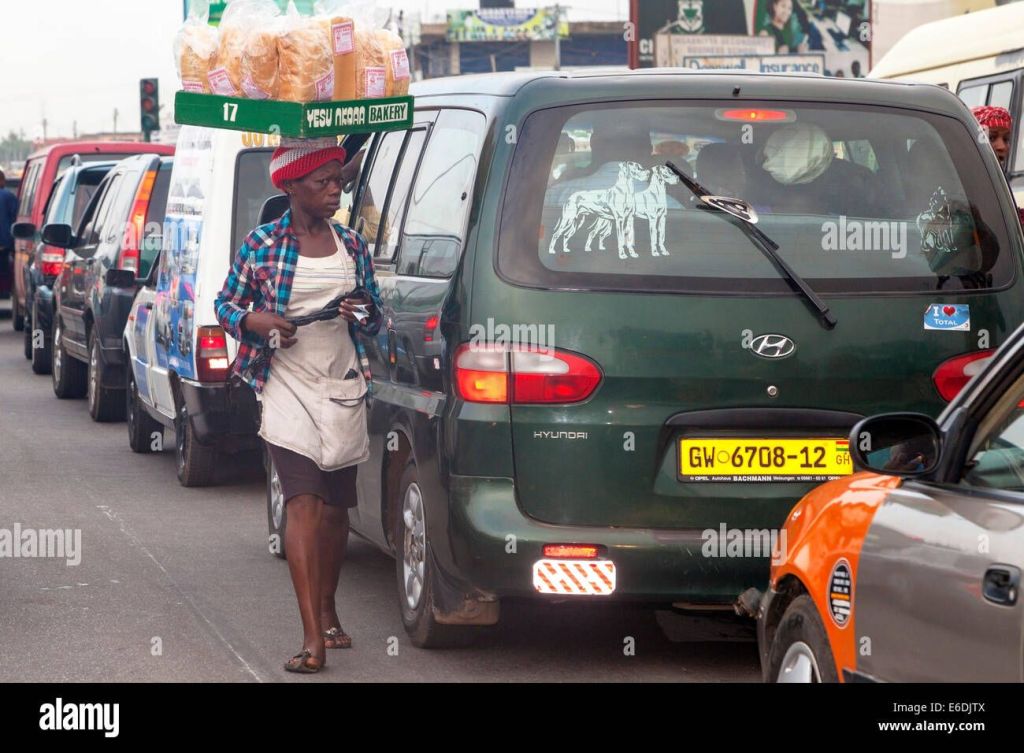
Men are now selling food in trays on their heads, like women
And now, the men are stepping in. Stephen Gayi of Kasoa calls himself a business entrepreneur. “I bake different types of bread—tea bread, sugar bread, even spicy rolls—and I sell in traffic like the women do,” he says, balancing a full container of baked goods on his head like a seasoned pro. What once was a cultural taboo—men selling food with trays on their heads—is being shattered by economic necessity. “This works for me. I make more in traffic than sitting in a shop,” Gayi adds. In a tough economy, culture and taboo take a backseat to the hustle.
Women play leading role in Ghana’s informal economy
The informal sector in Ghana accounts for about 88% of total employment, with women dominating retail and street vending. In fact, women constitute over 70% of Ghana’s informal sector labor force, especially in small-scale trading. This has created a kind of organic, people-powered market economy that functions with little support from banks, the government, or formal institutions. And yet it thrives.
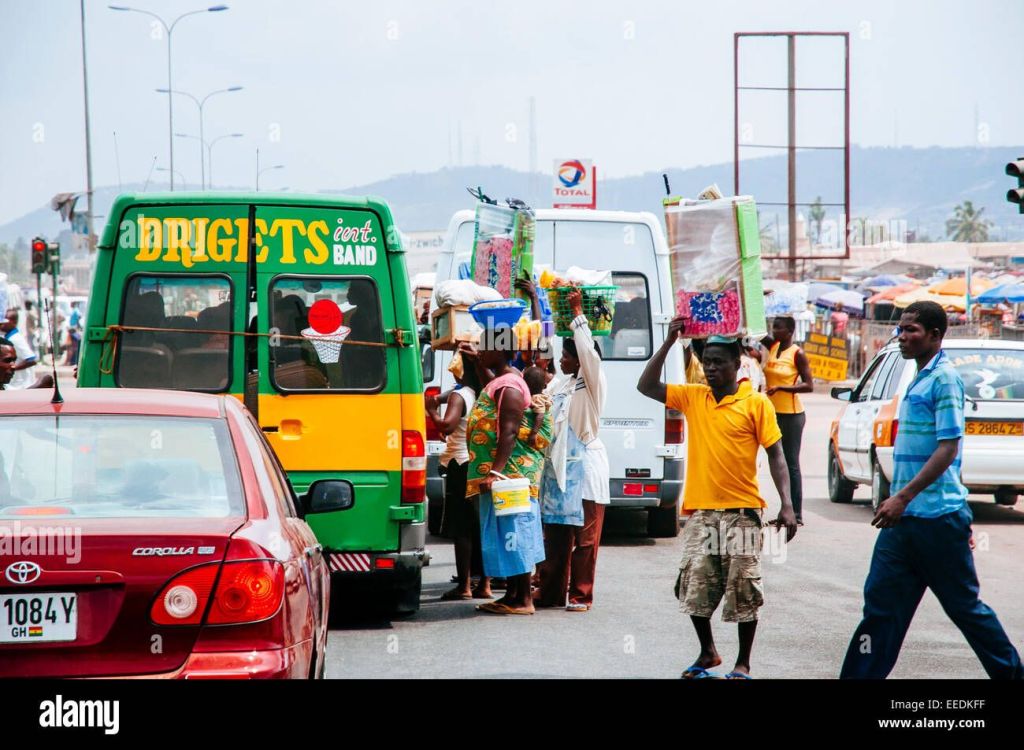
Market women are tech-savvy. know all about smartphones and mobile money
What’s even more impressive is the tech-savviness of these traders. Smartphones are standard tools of the trade. From mobile money transfers to WhatsApp group sales, even the smallest-scale hawkers are plugged into Ghana’s digital economy. No formal credit? No problem. They adapt, they collaborate, they crowdsource capital from susu schemes and rotate savings to keep things moving.
Many of today’s market women are educated and smart
And forget the old stereotype that this kind of work is for the uneducated. In today’s market scenes, you’ll find university graduates selling groundnuts, spring rolls, and beauty products—all because the formal job market has left them behind. Street selling is no longer a last resort; it’s a viable, dynamic livelihood strategy.

Stephen Gayi of Kasoa: he sells bread in the streets and says it’s a good hustle.
No need for big capital
“I used to think baking was just a side hustle,” Stephen Gayi admits. “But now I. understand the streets better. You don’t need big capital. You just need a good product, the right price, and the ability to move.” He adds with a smile, “I’m not ashamed to carry bread on my head. I’m proud. I feed my family this way.”
Need help from government and banks
But here’s the catch: these economic soldiers get little to no help. There’s very little or no access to credit. No insurance. No safety net. And yet they keep the economy running, one pie, one sachet of water, one mango at a time. If Ghana is serious about building a resilient economy, the government must start investing in the informal sector, not just regulating it. Training, financing, microloans, and public-private partnerships can go a long way in empowering this critical economic base.
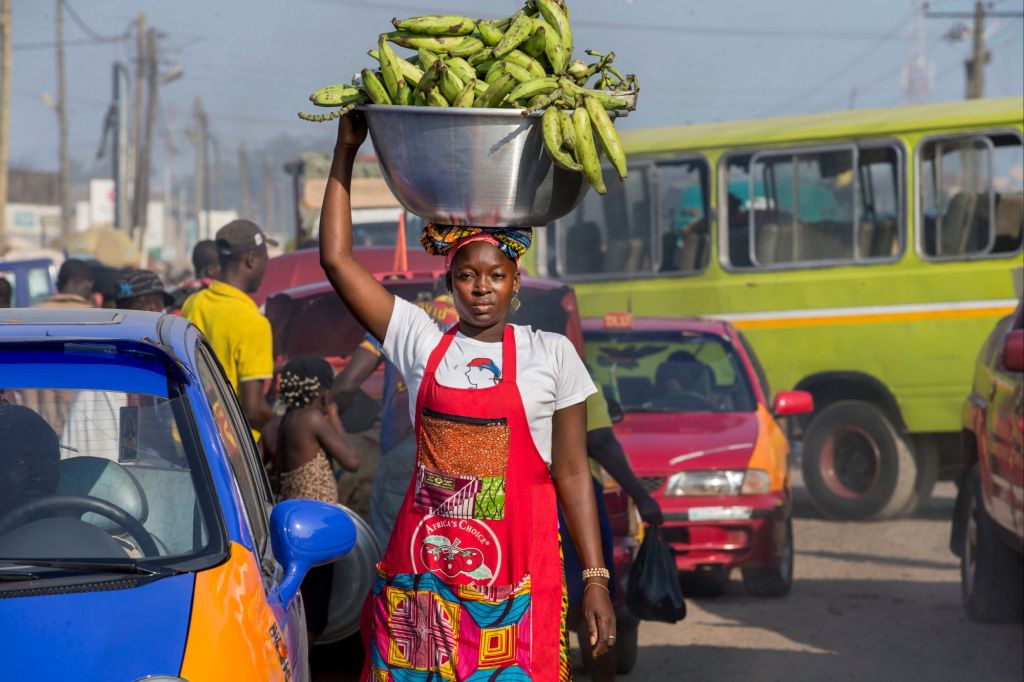
In Ghana, everything sells.
In Ghana, everything sells. From real estate developers pushing luxury condos to mothers hawking roasted peanuts on the street, the same principle applies: know your product, know your customer, move fast. The marketplace is wide open. The hustle is real. And for many, it’s a lifeline that just needs a little recognition—and a lot more support from the government.






 VisionAfricaMedia