
From the White House to Jubilee House, two historic leaders faced fierce resistance, yet remained symbols of hope. Can Mahama finish what he started?

About twelve years ago, I wrote an editorial in the CNY VISION Weekly Newspaper in upstate New York, comparing the political trajectories and leadership styles of President Barack Obama of the United States and President John Dramani Mahama of Ghana. At the time, both men were about twelve years younger, charismatic, full of ideas, and had just been elected into office under historic circumstances. More importantly, both faced daunting opposition determined to use every tool available to frustrate their administrations and, ultimately, make them fail.
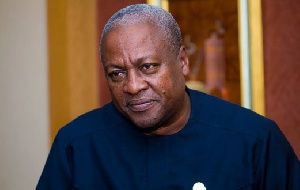
I was based in upstate New York then, covering American politics for the newspaper where I served as editor. From that vantage point, it was clear that President Obama’s presidency represented a huge shift in American political culture. Many white Republican politicians weren’t ready—culturally or politically—for a Black man in the White House, and they made no secret of their resentment. From the start, they used obstructionist tactics and openly stated their desire to make him a one-term president. For eight years, they tried to delegitimize his presidency with name-calling, misinformation campaigns, and persistent attempts to scandalize his administration.
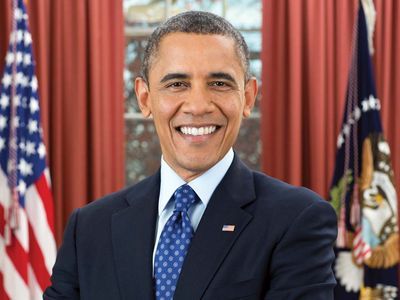
President Obama Survived Racist Attacks And Efforts To Make Him Fail
Despite the efforts to derail him, Barack Obama completed two terms without major scandals—a rare feat in modern American politics. His presidency, though imperfect, was generally viewed as decent and stable, especially when evaluated against the intense resistance he faced. The Obama phenomenon had a momentum of its own. While earlier Black political figures like Jesse Jackson and Rev. Al Sharpton ran for president and had energized sections of the Black community in America, their movements lacked the national traction Obama’s did. His campaign was a political firestorm that swept the country and culminated in a historic victory.
Fast forward to today: I am now based in Ghana, writing for online newspapers, and once again reflecting on the political journey of John Dramani Mahama. Unlike Obama, Mahama only served one term before being defeated by Nana Addo Dankwa Akufo-Addo in the 2016 election. For the next eight years, Mahama found himself in the political wilderness, recalibrating and planning a comeback.
President Mahama’s Return To Power
His first attempt to return to power failed, but his second attempt succeeded. Now, as Ghana’s president once again, Mahama has hit the ground running, rolling out policies he campaigned on and signaling that he intends to govern decisively.
Early indicators are promising. The Ghanaian currency—the cedi—has appreciated significantly in recent months, a development many analysts attribute in part to investor confidence in Mahama’s leadership. The performance of the cedi against the U.S. dollar has become a key metric by which many Ghanaians evaluate the government’s economic strategy. As of July 2025, the cedi has seen a rebound of over 10% against the dollar, according to the Bank of Ghana, marking its best quarter in over three years.
Still, Mahama faces an opposition party with deep political experience and considerable influence. Figures such as Hon. Alexander Afenyo-Markin, former Vice President Dr. Mahamudu Bawumia, and businessman-politician Kennedy Agyapong and many others are poised to challenge his policies and leadership. Their political savvy ensures Mahama won’t have a smooth ride.
Can Mahama Survive NPP Opposition?
Can Mahama do what Obama did—stay focused, resist the noise, avoid scandal, and leave a legacy of integrity and impact? Can he revive the economy, deepen democratic governance, and combat corruption in a meaningful way? So far, all signs suggest he is better prepared than ever.
“Mahama is the best-prepared president Ghana has ever had,” said Gabby Asare Otchere-Darko, a key figure in the opposition New Patriotic Party (NPP), in a recent interview. Though Otchere-Darko is a fierce critic, his acknowledgment speaks volumes about the general perception of Mahama’s readiness.
Public sentiment is largely in Mahama’s favor. The frustration and disappointment many Ghanaians felt under the previous administration remain vivid in the national consciousness. The people don’t want a repeat of broken promises and unfulfilled dreams.
The key question now is whether Mahama will stick rigidly to the National Democratic Congress (NDC) manifesto, or expand his vision to include policies that prioritize national interest above party politics. Barack Obama faced a similar challenge. In seeking to govern for all Americans, he was sometimes perceived—especially by the Black community—as too distant or disconnected from the struggles of his own base. In fact, during his re-election campaign in 2012, Obama had to double down on outreach to African-American voters and other key demographics, including the LGBTQ+ community, to secure a second term.
President Mahama’s Second Chance
Ghanaians have now given President John Dramani Mahama a second chance—a rare political gift. Their expectations are high. They want results. They expect delivery. Whether Mahama will meet those expectations and secure a legacy as transformative as Obama’s remains to be seen.
One thing is clear: the moment is his. The question is—what will he do with it?


 VisionAfricaMedia